Monday, 11 January 2016

Early Canadian Communities - Early Settlers

Early Settlers in Canada


We have been learning about early communities in Canada. We have learned and talked about the First Nations Peoples and the Inuit People of Canada.

We will now be learning about the early settlers. The following website provides lots of information about early settlers or pioneers. See what you can discover about the way they lived, what their challenges were, and how they affected the lives of First Nations and Inuit Peoples.
Click here to read about pioneers.

The following site has various links to other sites where you can further research pioneers and their way of life. Click here to find the sites. Try the Great Upper Canada Pioneer Adventure. You will have to make decisions about various problems and situations just like the pioneers did!

Friday, 1 January 2016

Basic Math Operations 

Parts of Equations

We will be looking at various math operations such as addition (+), subtraction (-), multiplication (x), and division (÷). Let's briefly discuss the parts of addition and subtraction equations.

Addition

An easy addition equation may look like this -

          7 + 3 = 10
addend + addend = sum


The numbers 7 and 3 are called "addends".
The answer is called the "sum".
10 is the sum of 7+3.

The Equal Sign


The equal sign (=) says that what is on the left of the sign is equal to , or the same amount as, what is on the right of the sign.
Let's look at the equations

6 + 1 = 10 -3       and       6 + 1 = 3 + 4
   7            7                         7          7

The amounts on either side of the equal signs are the same. Can you see how I could have written many more equations?

Subtraction

An easy subtraction equation may look like this -

          10 - 6 = 4
minuend - subtrahend = difference

The 10 is the first number and it is called the "minuend". It is usually the greatest number.
The number after the minus sign is called the "subtrahend". In this case it is the number 6. It is usually less than the minuend, but can be the same as the minuend.
The answer is called the "difference".
The difference between 10 and 6 is 4.

Click here for further information.
The Math is Fun! website has a good illustrated dictionary that explains many math terms. Click here to look at it.
You can also review and practise number skills on this site - click here.
Worksheets can also be printed from this site.


Saturday, 28 November 2015

Native Homes


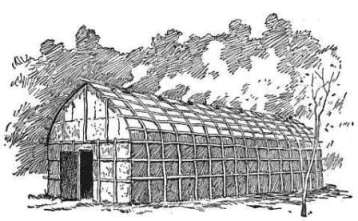
Below you will find links to view videos about various peoples and their homes. Native homes, similar to those in Canada, were also in the United States.
 
People of the Longhouse   click here

People of the Woodlands  click here

What types of Houses Did Native Americans Live In During Colonial Times?  click here

How to Build A Teepee (Tipi) click here   (Present-day people try to build a tipi.)

Monday, 16 November 2015

Social Studies


Communities in Canada  1780 - 1850

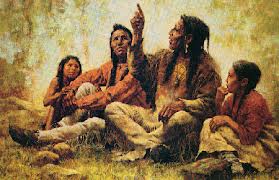
We are starting to learn about various communities that existed in Canada between 1780 and 1850. We will be learning about the Aboriginal people of Canada, including First Nations, and Inuit people. First Nations and Inuit people are considered to be the First Peoples of Canada. We will also be learning about the Metis people and European settlers. 

The following website has an abundance of information about the First Nations people. We will be reading from this site and discussing what we discover. My students are encouraged to read and research from this site and share their findings with the class. Click here to read about First Nations and Inuit people.

Monday, 2 November 2015

                          Khan Academy


All of my students have a Khan Academy username and password. You should try to complete a few skills every week. I am your coach, when I look at your progress, I will make recommendations about skills you should complete or practice. Please follow my suggestions and do at least 5 questions in each skill. If you are not sure about a skill, keep practising and watch the instructional videos.

Have fun learning!

                  Remembrance Day                  November 11th


In Flanders Fields is a famous poem written in 1915 by John McCrae, a Canadian military doctor. We read this poem every Remembrance Day, and try to understand the picture John McCrae paints with his words.

                Please click on the link below so that you can practice reading this poem fluently.

                  Try reading along with the presenter.You need to practice the poem many times.

Wednesday, 22 April 2015

Place Value 

In math we are studying place value to understand numbers and their values. This will also help us when we add or subtract larger two-digit numbers. Two of the main tools we use to understand place value are Base Ten Blocks and Ten Frames.


To learn more about Ten Frames, please watch the following video. Click here to watch the video.

Ask your child to teach you how to play Trash Can, a great place value game that is fun to play with the whole family. If they have forgotten how to play, they can watch the following video which shows how one teacher plays Trash Can, & 101 and Out. Click here to watch.